BLOG

Kendrick’s The King of NY And 5 Other Headlines That Have Me Reacting

Talk about someone addicted to Twitter. ‘Tis true. My engagement on social media has caused arguments in past relationships and friendships. My best friend walked out of a restaurant on me after dinner because I couldn’t wouldn’t put down my phone while we were talking. She was not here for my apparent rudeness.

I love Twitter for all the right and wrong reasons. The laughs are endless. The shade is epic. But don’t get it twisted. I’ve never been here for the Mean Girls of Twitter and the dragging that frequently ensues. More than the shits and giggles, Twitter is the best place to get all of my daily news in one place. Instead of constantly checking The New York Times or The Atlantic or Hip Hop Wired I can just read my timeline and click whatever I’m interested in reading. Not to mention Twitter is always the first to break any type of controversy, salacious headline worthy news or make a meme viral.

All that said, let’s get into the shenanigans and greatness Twitter brought my way this week.

‘Oprah, girl, you know you can’t afford this bag!

Homegirl in Switzerland really tried it. Oprah was over in Zurich, Switzerland getting her shop on at the upscale Trois Pommes when a $38,000 bag caught Oprah’s very wealthy eye. Per Oprah, the salesclerk had the audacity of hope (shoutout to my bestie for that phrase) to tell Oprah, “It’s too expensive.” Oprah let this cat of alleged racism out the bag to Entertainment Tonight while promoting Lee Daniel’s The Butler. The story received so much buzz—despite Oprah purposely not naming the store—the owner and salesclerk have since responded leading to Oprah’s apology for even mentioning the incident.

Oprah, girl, why are you apologizing? It’s your story to tell. You thought it was racism, so be it. This type of racism happens daily from black women being mistaken for working at the store (even though we have our purse and coat on like all the other shoppers) or being followed around the store as if we’re going to steal something. What was more interesting than the story itself was the response from some men. I missed the memo that gave certain men an authority on questioning why Oprah would dare think of purchasing a $38,000 purse for herself. Imagine it. Broke Negroes protesting over Oprah spending her hard earned money on whatever the hell she wants. Everyone reading this gets how that’s sexism at work, right? Because we laud celebrity men for their expensive art collections, multiple cars and fancy watches. Yet somehow a black woman who is a self-made billionaire considers spending nearly 40 racks on a bag and this is an indictment on her character. Man, listen. The critiques of Oprah’s spending says so much about race and sexism, and I have faith y’all understand why.

Big Sean, come get ya girl

I don’t like Naya Rivera and Sean together. There, I said it. Big Sean is actually hella likeable. When he’d talk about his pretty brown skinned ex-girlfriend Ashley I’d beam. If you’re wondering why mentioning she was brown skinned matters…well, I can’t really help you. It matters. Now that he’s with Glee’s finest and it just screams publicity.

Naya is going to milk this relationship. Ok? And I guess we will have to deal. Now I’ve never heard a Naya song a day in my life before this new relationship was force-fed to us on all the blogs. “Sorry” featuring her boo is basically a “Nah nah na boo boo. I got your ex man” song. The fact that she’s been with Sean all of two minutes and she’s calling out women he once loved is tacky as all hell. Insecure much? I mean, what was the damn point? There’s no way in hell Sean should’ve co-signed or even thought of laying a verse to that mess. Then, then, Nessa girl, he called it a lady’s anthem. For who? Basic Broads United? ‘Cause I can’t be bothered with putting pen to paper to publicly “diss” anyone my boo used to deal with if I haven’t been provoked. Let me find out Naya is salty about Medium Sean’s HOF  track “Ashley” dedicated to the ex he still holds in very high regard.

When you’re secure in your position you just chill. No need for shots. Again, unless provoked because some of these exes are…chile. This 2013 lackluster “he’s mine, you may have had him once but I got him all the time” is tired. Naya is no Mokenstef, so I’mma need her to do better.

Kris Jenner is passing none of the tests

Kris came for president Obama over his critique that Americans’ focus has shifted from the American Dream to what Kim K. is wearing and where Kanye is vacationing. He told no lies in regards to our society’s obsession with fame. But noooooo. Kris Jenner has the reading comprehension skills of an 8th grader. Her response to the president on her soon to be cancelled talk show was the poster child of Missing the Damn Point. It also irked me that Terence J. didn’t respectfully disagree with her as the week’s guest co-host. But I guess he must collect those coins with a closed mouth. I don’t even want Kris to have a seat. She should just lay down right along with Miley.

Don’t nobody care about your fake tears, Miley

Do you see what you rappers have done? You’ve now extended her 15 minutes of ‘Look at me, all the cool black rappers love me’ hype that would’ve ended by now, but nope. Y’all had to go make her the lead in your ratchet video and feature her on your songs. Miley hopped on Twitter to cry me a river.

Excuse me, bitch? I don’t have enough words to express how much I wish Miley would just go away. Far away. You can check out my more thoughtful views on her appropriation of black culture on theGrio.com.

You mad? #solidarityisforwhitewomen

Black women let have with #solidatirityisforwhitewomen, a hashtag that attempted to tackle the complex subject of  the white privilege that exists in feminism. Yes, GAWD. Chile, liberal white feminists were maaaaad. Women of color feminists have been silenced for decades. Feminism at its best must be inclusive of all women. Ain’t I A Woman? Too bad most took it as an all out attack on white women individually. It was not, and many women should’ve known better. Alice Walker tried to tell y’all that womanism is the way.

K DOT called that man Jermaine

Kendrick Lamar is the King of New York, he rapped. He damn near broke the Internet after New York’s Hot 97 debuted Big Sean’s “Control” featuring Kendrick Lamar and Jay Electronica. The cut didn’t make Sean’s upcoming Hall of Fame due to “sample clearance,” but it’s seven straight minutes of raw rap. Kendrick verbally assassinated everybody. I wouldn’t put it on my album either, b. Big Sean got “Renegade’d.” What made Kendrick’s verse so amazing is that he named names, like Jermaine Cole. Dog. J. Cole has to respond. You don’t just drop a man’s full government name without getting a hot 16 fired back at you. Disrespectful. Calling rappers to task doesn’t happen anymore because rap has gotten all Cottonelle soft peaceful and shit. He singlehandedly put the natural competition back in rap. Now these dudes have to step their bars up. And this is why I just can’t leave hip-hop alone.

The energy on Black Twitter Monday night was palpable. It really was a moment for hip-hop. I was glued to my timeline for two hours straight. Folks had a field day with the memes of who K Dot named and he who he didn’t—because the ones he didn’t name he most likely considers unworthy. Catch this tea that Lil Wayne wasn’t mentioned. Or Kanye. Sips my red Koolaid. By midday Tuesday not one rapper had responded on a verse. Joell Ortiz was the first. Rappers (Lupe, Pusha T, Joey Badass, Joe Budden, Fabolous, etc.) reacted via Twitter, but not one verse. Remember when Angel Haze took 30 mins tops to respond to Azealia Banks’s diss? Yeah. I need the fellas to get it together.

Before anyone dared to get in the booth Styles P had already won the Internet. A real goon, Styles was not here for Joe Budden @’ing about the K Dot saga him as if they were cool. He told son he’s a street dude and Joe was a ‘net dude. LET THEM KNOW, STYLES. Styles P is a real G. Joe may want to lay low.

K Dot didn’t diss anyone in the verse. He has tremendous respect for the guys he named. But as a student of the game who has studied hip-hop, he wants rappers to get back to the art of the music. If Kendrick made dudes think about the lyrics, wordplay, storytelling of their next rhymes, I salute him. Hip-hop needed that.

Nas still king of New York though.

So you see, there’s a method to this Twitter madness. I admire the freedom of those in professions that doesn’t require them to be on any social media. That is not my life though. Even with the hashtags and retweets, n—-, it’s still 140 karats in these streets. Word to Shawn Carter.

What headlines had you reacting? Let me know in the comments!

The N-Word: It’s Complicated

Oprah wouldn’t be able to ride the train in New York City without her ears ringing from “nigga” being tossed around in public conversations like a ball during ping pong.

Lee Daniels’s The Butler (August 16,2013) has sent Oprah into a press frenzy. Rocking beautiful curly tresses she’s sat down with a myriad of press to promote her role in the film alongside Forest Whitaker, Lenny Kravitz, Terence Howard, Cuba Gooding Jr., Jane Fonda and Robin Williams. The Butler retells the story of a black butler who served eight U.S. presidents over 30 years during the Civil Rights era.

Oprah’s stance on the N-word isn’t a secret. One of the reasons she’s turned off from most hip-hop is its use of the word as a term of endearment. She agreed to disagree with Jay-Z over it in 2009 when he took her to the Marcy projects that raised him. In a recent interview with Parade magazine Oprah, Forest Whitaker and Lee Daniels shared their thoughts on race, particularly the word in question, but it was Oprah’s response that stood out.

You cannot be my friend and use that word around me. It shows my age, but I feel strongly about it. … I always think of the millions of people who heard that as their last word as they were hanging from a tree.

If you think about the second half of her comment long enough you’ll cringe.

Born in Baltimore, lived in Philly, Grand Rapids and Saginaw, MI before settling in Nashville when I was 12, I consider myself a southerner. The N-word wasn’t used in my pro-black home, my aunt’s, my paternal or maternal grandparents or my Dad’s home (well, maybe occasionally). It was only incorporated in my daily life through music, film and my environment outside of the home.

When I moved to New York three years ago I rolled my eyes  every time I rode the train and heard Latinos comfortably saying “nigga” as if it was their own to reappropriate. No one else blinked an eye. I, however, was annoyed. The history attached to “nigger” is not something I suspect they’ll ever truly know. How the word was used to dehumanize blacks for hundreds of years is something they can empathize with, but never fully understand. So it bothers me that black New Yorkers have given Latinos—poor and brown—a pass. Although I’m sure they exist, I don’t know Latinos (mostly Mexican) where I’m from who say it in everyday conversation. There are just certain boundaries in the south that are understood. Ask white rapper Yelawolf from Alabama— he knows what’s up.

I’m equally irritated when I get on the train and hear black youth calling each other “nigga,” but the annoyance comes from a different place. I don’t want black kids thinking they are nothing but “niggas” because how you think of yourself is how you will navigate through life. I also wonder how many misinformed white people listening to blacks call each other “nigga” will use it as justification for either using the word themselves or downplay the offense and hurt people have when a white public figure calls someone a “nigger.” I won’t ever get used to an entire generation’s comfortability with a word they seemingly know so little about.

Black America has had the debate over the N-word as long as I’ve been alive. Remember the well-intended but useless funeral for the N-word held by the NAACP in 2007? Six years later this debate has been pushed to the front of America’s racial discussion palette again when Paula Deen’s court deposition admitting she’d used the word “nigger” were made public. As a result she’s lost nearly $12.5 million from the cancellation of her show and endorsements. Although George Zimmerman was on trial for the murder of Trayvon Martin, Trayvon’s linguistic choices as well as his character were on trial that led to Zimmerman’s acquittal. Rachel Jeantel admitted “cracker” and “nigga” were words teens from their area used in everyday speech. Don Lemon’s five point plan for blacks to aide in ending racism included the condemnation of using the N-word along with not littering and not sagging. Yes, because if black folks just stop littering and sagging racism would magically end. And Philadelphia Eagles’ Riley Cooper was caught on video saying, “I’ll fight every nigger in here” at a Kenny Chesney concert. He apologized on Twitter, was fined by the NFL, returned to training camp and life went on. Pundits blamed hip-hop for Cooper’s racism even though he was at a country music concert when he said the word with a strong “er” on the end. He’s racist. Period. The end.

Much of the debate around one of the most controversial words in the English language always swiftly turns to white America’s entitlement rearing its white privilege. “Why can’t we say it but blacks can?” The real question should be, why do you want to? There’s always the remedial argument that if blacks want whites to stop using the word we must hold ourselves accountable by not saying it. I hate that argument as much as I hate the argument that the word only has as much power as you give it. The word is offensive, it’s black people’s and black people’s alone to reclaim and the word should NEVER be said by non-blacks. Not when rapping (skip the “nigga” lyrics), not when around your black friends to try to sound down (even if they give you a pass), just never. There is only exception and that’s in journalism where reciting a direct quote is necessary.

Although I don’t agree with policing people’s speech, deep down I know some things do start with us.

I don’t particularly find it empowering to call the black men I respect or love “nigga” in the same way I don’t feel loved when my girlfriends call me “bitch” endearingly. There really is no need for me to ever use the word “nigga” so why is it so hard to let go?

When you know better, you do better. History is not something lost on me. As Oprah noted, the imagery of ancestors hanging from a tree hearing themselves called “nigger” before dying is enough to give me goosebumps. Yet here I am saying “nigga, nigga, nigga” like I’m trapped in a Trinidad James song. Like blood on the leaves, “nigger/nigga” is too painful to continue to ignore. Black men and women are quickly dying at the hands of their peers and by racists who only see criminalized bodies. They are not the “niggas” they call themselves, or the “niggers” they’ve been perceived.

An age old adage goes something like: It’s not what you’re called, it’s what you answer to. As it relates to “niggers/nigga,” it’s both. I don’t want to be called or answer to either.

Girls Are Made Of Sugar And Spice And Everything Nice?

The bell rang dismissing us from Ms. Gail’s 4th grade class. Within minutes Jeremy and I found ourselves rumbling near the stairwell. We were eventually pried apart and taken to the principal’s office where our mothers were notified via phone we’d been suspended from school for fighting.

Jeremy was no different from most elementary school boys who teased or playfully (and sometimes aggressively) hit you because they had a pre-pubescent crush. “Look at that big ol’ head on your little body. You look like Mr. Potato Head.” “Ya mama!” I barked back. I’d missed the memo that “ya mama” jokes kicked Jeremy’s hyper-aggression into drive—even for a girl much smaller than him—so he hit me. Oh, we’re going to rumble ’til death, I thought. Protecting myself at all costs, especially against a boy, was my only concern.

I was never meant to be a ‘nice’ girl. I share the blood of warrior women. Docile wasn’t something I’d witnessed.

For the New York Times’s parenting blog, Catherine Newman opined why she didn’t want her 10-year-old daughter to be nice in a 971-word piece titled “I Do Not Want My Daughter to Be ‘Nice‘.” The proud “radical card-carrying feminist” lived her entire life smiling when she didn’t want to so she’d be liked by everyone. Newman didn’t want her daughter to be a carbon copy of herself. She wrote:

Birdy is polite in a “Can you please help me find my rain boots?” and “Thank you, I’d love another deviled egg” kind of way. But when strangers talk to her, she is like, “Whatever.” She looks away, scowling. She does not smile or encourage.

I bite my tongue so that I won’t hiss at her to be nice. I tell you this confessionally. Because do I think it is a good idea for girls to engage with zealously leering men, like the creepy guy in the hardware store who is telling her how pretty she is? I do not. “Say thank you to the nice man who wolf-whistled!” “Smile at the frat boy who’s date-raping you!” I want my daughter to be tough, to say no, to waste exactly zero of her God-given energy on the sexual, emotional and psychological demands of lame men — of lame anybodies. I don’t want her to accommodate and please. I don’t want her to wear her good nature like a gemstone, her body like an ornament.

Her thoughtful piece on Birdy’s lack of niceness that patriarchy tells women they should have (it’s part of being feminine, duh!) led to commenters pitchforking Newman down.

Sounds like it’s more about Mommy’s anger and her wish for a do-over of her own past than it is about Birdy.

This too:

Why does this girl have to be an unpleasant and unlikeable grouch to be strong and say “No”? Of course the over-pleasing has to go. But can’t it be replaced by serenity and love, with an inner strength? That is true power.

More:

That’s great, but don’t expect anyone to care when your daughter complains that the world is hard, people are uncaring, and no one appreciates how great she really is.

And finally:

Good. I won’t be “nice” to her, either.

Scrolling through the 100-plus comments I scratched my head at the opposition to the author’s argument, which was not without fault like her correlation to an older man calling a little girl pretty automatically being a creep, or as if smiling through life automatically would lead to the stripper pole. I also didn’t get the assumption to a strong-minded young girl with no desire to over-please led to the assumption she was a disrespectful, rude little grouch. The only indication the mother gave that Birdy may be snappy at times was when she noted Birdy looks away “scowling” when strangers talk to her. It was strange that commenters couldn’t understand that since we typically teach children as early as preschool to “never talk to strangers.”

In the reader’s mind there were only two ends of the spectrum: Nice or Mean. God forbid anyone challenge gender norms. And what about a happy medium?

In Jezebel’s “Being a Good Person Versus Being A Nice Girl,” writer Katie Dries basically agrees with Newman while offering her own personal experiences. Dries writes:

Be a good girl?” “Smile, sweetie.” “She’s such a nice girl.” They’re all phrases most women have heard in their lives, whether they’re on the receiving end of them or have heard them being said to another woman. “Good” and “nice” are adjectives that have a lot of baggage for women, which is why it’s so refreshing to read about a woman who is trying to avoid teaching her daughter to be either of those things.

…I have spent my life trying to be a good person – Newman uses the word moral, which also works – not a nice girl. I realized pretty early on, in middle school, that I was probably going to spend my life being called a bitch because I wasn’t overly sweet and friendly to people. The only time it ever bothers me is if I find out I’ve actually upset or hurt someone. Because if I was actually a bitch, I wouldn’t have good friends and strong relationships and a family who loves me (she said to herself, convincingly). I don’t give compliments easily. I don’t smile at people on the street unless I’m in nature and it’s the first person I’ve seen in miles. I am polite to grocery store baggers. I try to be purposeful with my actions.

I have sugary sweet female friends. If you don’t like them it’s you, not them. I’m also friends with women who aren’t conventionally nice but are kind, good people. Because I am so different from the former group I’m always interested in how they can be so damn nice when life gets hard. I admire them for it.

Admiration and all, I have no desire to be the nice girl in the way it’s intended for women. This puts me in sticky situation as a black woman. The Angry Black Woman meme is pranced around the media as another way to pathologize black women. First Lady Michelle Obama couldn’t escape the ABW accusations from the right when she firmly but professionally approached her heckler at a fundraiser or when her Princeton thesis surfaced on black disparity. Mrs. Obama was all too familiar with the ABW trope. Last year she told “CBS This Morning” co-host Gayle King, “I’m not some angry black woman” as the media had tried to portray her. Anger is the one emotion every other group of people understandably can feel, just not us. Black women are publicly and privately silenced by fear of being deemed too emotional or angry. It’s a burden we must carry the minute we leave the front door of our homes and present ourselves to the world—a world that for the most part has already defined us into stereotypical boxes. Not wanting to be nice comes with a heavy price for women, an even heavier one for black women.

But if being nice means I bite my tongue when a stranger touches my ass on the subway, I don’t want it. If the nice card means I’m spoken over in meetings while presenting an idea, I’m not interested. If nice is staying silent the 101st time I’ve been street harassed in a day as to not be considered a bitch, I will gladly pass. Unfortunately as women, niceness is often equated to weakness and the perception of weakness can mean fighting for your life in more ways than one.

My lack of interest in being nice doesn’t mean I delight in—mine or other’s—obnoxious, rude, mean or hurtful behaviors. I don’t. I work everyday to be kind, compassionate, ethical and moral. Kindness and girly nice isn’t synonymous.  Usually niceness is done as a fake pleasantry and I’d rather authenticity. I’m an opinionated writer who unintentionally ruffles feathers. Nice wasn’t in the personality cards for me. And I’m ok with that.

It’s important to remember nice is relative, but as it relates to women it comes with a level of expectation to be “good” or act like a “lady” and a host of other standards I couldn’t care less about following. I hope my future daughter (and son) are who they are, authentically. I will be OK if my daughter is girly nice because I don’t think it’s a bad thing. I’m also very aware of the repercussions for ballsy, no-nonsense women. As one NYT commenter warned using her own adult daughter as an example, “Unfortunately, there is a downside [to being tough]. She has had trouble keeping jobs (and friends… and boyfriends… ) because she can be rigid and judgmental and caustic. Girls pay a greater price for being tough?” Yes, we do.

If my daughter happens to encounter her very own Jeremy, the one thing I’d hope she doesn’t do is take the high road by being nice while he’s punching the crap out of her. Take him down. Because nice just doesn’t work in some circumstances. Not even for girls.

Girl, What? Tamera Mowry-Housely Can Keep Her ‘Good Girl’ Advice On Snagging a Hubby

Touch my magazine collection and you’re likely to lose a limb. I’ve hoarded my glossies across three states—Tennessee, Indiana, New York—to the dissatisfaction of every person whose ever helped me move. They’re all like, “Girl, you need to let some of these 1994 VIBE’s go. They take up too much space.” And I’m all like, “Trick, you done lost your mind!” Then packing all my mags neatly in the moving tubs commences.

Women’s mags are my favorite, with all its criticisms that I promise aren’t new. I love being a woman, I love womanhood, I love when women share our stories. It’s why I’d pick up [insert name of your favorite woman’s mag here] on the newsstand over Esquire knowing Esquire is going to have the superior writing. What’s hard as a magazine junkie and journalist is overlooking the way many women mags talk to women as if they’re clueless pre-teens who need their hand held through life. I grow frustrated with the “Change this about your body, buy this product, do this amazing move in the bed to please your man” articles that show up every month in our favorite chick glossies.

I’m into non-sexist advice on love from both men and women in the same way I dig women’s mags. I recognize its flaws but revel in the beauty of what’s presented when done right. When the love advice takes an ugly dip from ‘this is what worked for me’ to ‘you can’t turn a ho into a housewife’ is when I bow out gracefully.

One half of my favorite child star twins, Tamera Mowry-Housely (Sister Sister), sat down with Angela Burt Murray’s (former EIC of ESSENCE) new site CocoaFab.com to talk marriage and mommyhood. Tamera’s a gorgeous positive image on cable television amiss the drink throwing that dominates reality TV. She and her sister Tia snagged seemingly loving husbands in an industry that relies on superficiality all while maintaining careers. Everything about the girls who used to yell “ROGERRRRR!” reeks Supercalifragilisticexpialidocious happy all the time. So her roadmap for women who eventually want to be wives and moms had to be harmless, right? Oh so wrong. Tamera prefaced her advice with a Nicotine like warning for what was to follow.

“I’m very traditional. I’m old school and that’s just how I am. It’s in my DNA. I had to get to the point where I just had to embrace carrying the torch for the traditional girls out there. I love representing the traditional black woman.”

Traditional? Cool. My awesomely feminist ass is traditional in the sense I enjoy chivalry, I want to feel protected (yes, my man walks on the side of the sidewalk closest to the street) and I’d like to be married before popping out any beautiful brown babies. Traditional! Tamera’s brand of traditional, however, is not something that I’d willingly get down with; and it has nothing to do with the virginity she lost at the age of 29. Bravo for her. Obviously the nuggets of miseducation wisdom she imparted upon all of the Internet worked in her favor, but the first two pieces of advice left me wanting to throw something at my perfectly functioning MacBook Pro.

Tamera says,

“Be refined. Like my grandmother always said, ‘dare to be different.’ While it’s popular these days to be the Rihanna to his Chris (okay, sans the abuse fiasco), consider being different from all of the overly sexy, turnt up girls. Guys want someone who stands out from the crowd. Remember, there’s a HUGE difference between wifey and wife! Don’t get it twisted.”

Girl. GIRL! Tamera can have all the pew seats in the back of her grandmama’s church with her respectability politics bullshit. (Note: Tamera jumped on Twitter to go on record that she never mentioned Rihanna or Chris in the interview, so I won’t even address how problematic that was). You have to wonder if Tamera was giving a similar interview to ELLE.com would anything about being “turnt up” have been mentioned. Me thinks not. But because it’s a site tailored to the black female demographic she felt she had to put on for her audience. Whatever works for you, boo boo.

What is wrong with a woman being “overly sexy?” Everything women do is not for the attention of the male gaze. It is her body to adorn the way she sees fit. If dressing sexy is what keeps women from eventually checking the married box on tax forms those marriage stats should be declining any day now. And if a woman does care about meeting men, what does Tamera think gets the guy at the bar to approach a woman he finds attractive? It usually isn’t her bare faced, sweaty pits from a fresh work out at Crunch. Men don’t tend to approach women based on how many books she looks like she’s devoured in her lifetime.

My problem with the whole act refined so a man will wife you argument—beside it being utterly ridiculous—it’s rooted in this fallacy that all men like the same kind of women. Khloe Kardashian, Jada Pinkett-Smith and P!nk are all very different women who’ve never seemed too concerned with refinery. They’ve all managed to walk into wife territory. It’s dangerous to sell the idea to women, especially black women whose image has been pathologized and scrutinized since forever, that only a certain type of woman gets to have the long wedding gown, three tier cake dream.

It gets worse.

“If you start having sex at such a young age, by the time you’re in your 30s and 40s, it’s old. And you’re trying many different ways to keep it new. I wanted to experience all of that once I got married and living with my husband. Perhaps trying all of the kama sutra positions with your jumpoffs and boyfriends isn’t the best thing. After all, that will leave nothing new to explore for your husband.”

Mrs. ‘I held on to my V card until I was 29 so I’m special’ really tried it. Everyone ain’t you. This is slut-shaming in its most boring form. As someone who didn’t take the plunge into headboard knocking until a few years ago, I’m not sure how she’d know how, when, or if sex ever gets old. While I understand the idea of wanting to leave some sexual exposés for your husband only, that’s a personal choice between a woman and her vagina. Women who’ve been having sex for over a decade by the time they’re 30, or women who’ve done everything sexual with anyone they damn well choose shouldn’t feel shamed for it, or made to feel marriage may skip them because they did one too many doggy styles with men who weren’t their husbands.

Legions of women are interested in what folks (although I wish more of us would be more discerning with which folks) have to say about how to find a man then get him to say, “I do, I do, I do,” (Jeezy voice). It’s exhausting that all the advice is focused so much on how women have to be able to always stay classy in the streets but p-pop on a handstand in the bedroom, cook five days a week, don’t give up the proverbial cookies too soon, don’t be a pushover but not too mouthy, be nurturing but not too needy and make sure you look like a superstar at all times. Thank you, patriarchy. Actually patriarchy, go ride one.

It bothers my soul when women buy into patriarchal attitudes of what makes a woman ‘good’ or wife material. The Madonna-whore dichotomy is soooooo played out. Sort of like the phrase played out. Women are human beings who have the brains to make their own choices for whatever is right for their lives. Do you. A man can get in line with the you that you love or he can ride off in the sunset with the Natashas* of the world.

And let’s just keep it all the way real, sister to sister. Tamera is giving all kinds of snooze. I think I’d rather take advice from Amber Rose. She’s married too.

* Natasha was the 20something Big went off to marry after his breakup with Carrie. Carrie thought Natasha was so perfect in comparison to her. We all know how that ended.

Marriage Through The Eyes of Nicole Ari Parker and Boris Kodjoe And Salim and Mara Brock Akil

“storytelling is so crucial in our community. share your stories with your friends. listen to theirs.” – @pegaita

I want to get married. Realizing that has taken 28 years.

No one knew Kerry Washington was dating Nnamdi Asomugha let alone had we suspected she’d secretly gotten married. Everyone who follows pop culture knew Janet Jackson was dating billionaire Wissam Al Mana, but the couple managed to keep their marriage a secret for months. Women laud celebrities like Kerry, Janet and yes, Beyonce, for being notoriously private with their love lives. Social media has made it so it’s incredibly easy for people to think they know you/your life so I get it, but I’m the exact opposite of Janet and crew. When I’m in love you will know. That’s not to say you’ll know my business; it is to say I have no problem expressing love publicly for the person I’m with. There are two reasons I’ve begun questioning whether or not I should. One is because people put those who are calculatingly private with their relationships on a pedestal. The other is my love and I work in the same industry which comes with nosey lurkers looking to be messy. More importantly I NEVER want anyone to think I owe my success to him. All that said, thank God for couples like Boris Kodjoe and Nicole Ari Parker and Salim and Mara Brock Akil who choose to share their truths with the hopes people can take away something from their unions.

For 45 minutes host Tanika Ray spoke to married couples Boris Kodjoe and Nicole Ari Parker along with Salim and Mara Brock Akil who were all brutally honest about what makes their eight and 14 year respective unions work for them. Their candidness about the issues they individually have is refreshing. Everyone has issues, even rich folks. Both Nicole and Boris had just gotten out of relationships with baggage. Although they’d already fallen in love they stepped back, taking a nine month break and went to therapy separately. Salim suffers from depression–which he self-medicates with weed–and Mara has abandonment issues. Boris and Salim grew up without fathers and had to heal from that pain before being the great men, partners and dads they are now. Nicole grew up seeing her partners argue all the time so she thought it was ok to yell and storm out. Boris had to shut that down by letting her know what he wouldn’t tolerate.

In my own life I’d always loved love despite not being sold on the benefits of marriage for women. Droves of little girls still wearing barrettes fantasized about the day they’d walk down the aisle finally trading their family given last name for a brand new or hyphenated one. Coming from a strong matriarchal family I never gave marriage much thought, nor did I think it was beneficial for women. As a feminist I saw marriage as solely benefitting a man since the woman would most likely still have to work, clean, cook and be the main child caretaker. Marriage doesn’t guarantee your husband will be active in any of the above. And if it ended in divorce? The woman was screwed.

Both my maternal and paternal grandparents are married to this day. But my mom had never been married (and has no interest at this point), both of my godmothers have never been married, my Dad’s sister has never been married and my mom’s sister has been married and divorced twice. These were all smart, double degreed, home-owning, kind, cooking, traveling, fun women who’d lived full lives without a life partner. Get married for what? was the motto. After some self-examination I’d realized my views on marriage had more to do with a fear of not being a good wife due to the lack of examples I saw. I’d also never been in a relationship longer than two years. My grandparents marriages works for them, I suppose, but it wasn’t what I wanted for my own life.

The BET Experience: Couples Revealed reminded me that everyone comes to the table with their bullshit; and after saying ‘I Do’ is when the real work starts. If nothing else it’s inspiring to see married black folks being transparent. It sure beats that 44% of black women have never been married tired headline. As for me, no wedding bells in my near future. I’m working on myself to make sure I’m the best me for when that day comes.

“You are taking away your energy to do what you came here to do.” – Mara Akil on wasting energy thinking your partner’s going to leave you

“People too often leave the ship before they give themselves and partner a chance to work through something that could make their marriage stronger.” – Boris Kodjoe

“Working with Mara is a continuation of our relationship. We’re both friends. We like spending time together.” – Salim Akil

“You got to remove our past out of our future.” – Boris Kodjoe

Stumbling Is Not Falling

For six months an overwhelming struggle has clogged my throat choking the inspiration from my bones. The pursuit of happiness and purpose gets muddied when surviving in what can sometimes be a soulless city of 8.3 million. Some mornings it takes everything in me to get out of the bed only to find myself dealing with the invasion of my personal space, the deranged guy on the train hurling a loogie in your direction, the teenagers who rob for the $200 iPhone your Dad bought you for Christmas,  your landlord who won’t answer the phone to fix your non-flushing toilet or your co-worker who throws you on the bus for no other reason than she is hella pregnant and “frustrated.” With all its flaws, just like a breathing person you share a connection with, you love NYC anyway.

It’s not NYC, it’s me.

Before the oversized exposed brick apartment in Brooklyn, before the job at The Network, before praying for sister-friends in the city I’d moved to in 2010 without knowing more than a handful of people, there were sleepless nights daydreaming about what I eventually got, but what was now not enough.

I feel guilty for not being able to marvel in blogging for a fancy network, interviewing artists, partying (and drinking) at the look-at-me-I’m-industry events for free. Because after all, this is what I wanted, right?

***
One of Oprah’s daily prayers for years has been, “Use me Lord.” Look at God! Won’t He do it? Used her He did. I too, want to be used. More than wealth or worldly success I want to live a life of purpose. What did I do to change the world while I was here? How many lives did I touch? Did I use my talents/gifts to help people? Those are the things that really matter when it’s all said and done.

***
I don’t live or breathe entertainment news. My insides don’t tingle during brainstorming meetings when listy ideas about things with which to bedazzle K. Michelle’s vagina are presented. My idea of living a purposeful life doesn’t consist of beginning my day searching gossip blogs for content to post. Knowing the ins and outs of the housewives-of-whatever-the-fuck serves not one solitary purpose in my life or the world. It pays the bills, though. My heart is in human interest stories and women and love and race and pop culture with a social angle. Follow your passions. They say. It will never lead you wrong.

***
I have a significant other whom I love deeply. Only months after we started our Brooklyn love affair writing for myself became non-existent. I’d try to type the thoughts in my head, but I couldn’t get past the lede, let alone the first graf. What was once a resilient mind eager to make a name for herself in this industry became the chick who was anti-industry. And more importantly a new woman emerged who hated everything she wrote.

For the first time in my adult relationships I was dating my career equal. The love of life, a writer like myself, holds a coveted title at an indelible magazine. His career trajectory (and overall greatness) hasn’t been easy to accept. It crippled my ego to have to ask  him for help. Knowing that he wrote better than me was a huge blow to my now humbled ego. You’d have to be a writer or artist to understand. Around this time his ex girl of over a year started acting out erratically with crazy, bitter ex-girlfriend bullshit directed at me instead of the person she was truly angry with. This continued for months. Publicly, I never said a word. As a writer, one I’d once admired for her pen game, I took the higher road, one that I’m not prone to taking. Secretly I’d wonder what he thought of her as a writer even though he’d never mentioned her in much of any capacity let alone professionally. And in thinking her wordplay was one to reckon with I started to believe my own ink was not worthy of the blank white pages in front of my eyes.

She was writing feature stories. I was writing FOB pieces. She was well known and (presumably) liked in the industry. I was the underdog who’d rather be respected than BFFs with a bunch of industry heads. She’d held a coveted job at a magazine, something I’d moved to NYC to do but hadn’t yet achieved. In exhausting my brain with comparisons I didn’t write anything for myself for six months. The day after she sent me an apology email for her behavior, I wrote.

***
Facebook has a way of making you believe people’s lives are much grander than they really are. Since I rarely log in I was shocked at my own tears after seeing so many brown women I admired opting to pursue their true passions in lieu of the 9-5 cubicle life. Everyone was moving on with life happily by doing what they were passionate about. If it didn’t work out at least they’d gone balls-to-the wall pursuing it. Meanwhile I sat staring at my barely there vision board. There were not any magazine pictures I could carefully clip out with the words ‘I have nothing to put on this vision board because I’m still figuring it out.’ What the hell did I want to do and how was I going to do it? I’d not heard of a lucrative career that intertwines my passion for race and women and diversity in the media. If I was so passionate why wasn’t I doing what I loved on the side until someone paid me to do it?

That bitch named complacency. Sending out hundreds of resumes for 18 months (how long it took me from the time I moved to NYC to land at The Network) with rejection after rejection didn’t feel good. It took a toll on my self-esteem. To finally have a nice salary in comparison to the days I didn’t have the fare to catch the LIRR into the city will make one get comfortable. When ‘kill what you eat’ was replaced with stability, the hunger subsided.

Self-promotion and all the talk of building a brand also wore me out. Tweeting, Facebook sharing and Instagramming felt like begging people to read my work. Writers must brand themselves nowadays. It’s how you get opportunities that eventually land you in front of TV cameras. If I never heard the word brand again it’d be too soon. So many people talk about their brands, but where is the work? I always want my work to speak for itself.

I lamented to my lover about not having a niche. Every writer–specifically journalist–whose name you know has a niche. Toure does race. Kevin Powell does music. Vanessa Grigidorias does profiles. Lola O. does entertainment. Elliott Wilson does hip-hop. I do…I felt like I lost my readership now that I worked at The Network because they didn’t care about fluff. They became followers of my work because I wrote thought provoking commentary on issues that were controversial or at the least that had significance. My significant other (because aren’t we too old to be boyfriends/girlfriends?) used the analogy of an artist who goes mainstream abandoning their core fan base for a wider audience. I think he was on to something.

***
My one and only internship was at VIBE magazine in 2009 under Danyel Smith. As a 25-year-old grad student I was the oldest intern of the crop. Brad Wete, who was an editor at the time, was eight months younger than me. I’d decided I wasn’t working hard enough. With that determination I moved to New York in August of 2010 with one goal in mind: To make it as a writer.

A month or so ago I ran into DSW at a listening session for Kat Dahlia. When my homegirl who works in marketing for Epic Records invited the crew to what would be music, open bar and food–we were so there! Here we were, DSW and I, four years after my internship, chatting as if it was the day in ’09 I met her at the Wall Street VIBE offices. Danyel will never know it, but her candor that night, I’ll remember forever. “Give me an insecure writer over an arrogant one any day” was only one of the many gems she dropped. If a woman who has accomplished as much and writes as beautifully as Danyel truly understood the agony writer’s have with loving the words that flowed from our heads to the page, I knew I’d be ok.

Believing in yourself is only half the battle. It’s true: Your thoughts become your reality. Relentlessly following your passions and allowing the Universe to lead you is another half, so I’ve heard.

The other part? To keep writing. No war has been won by the person who gave up. As I stare at my Twitter feed at 2:34 in the morning my hero, Malcolm X, reminds me, “Stumbling is not falling.”

* Written January 24, 2012
** It took me five months to publish it for obvious reasons
*** If you’re referenced in this blog in an unflattering way, behave better.

Trading Self-Empowerment for Superficiality?

Sunday we drove to Ft. Greene for date night since he’d never eaten at Madiba’s. According to the New York magazine the quaint restaurant with its native decor was the first South African restaurant in America. After finishing our mushroom sautéed steak, fresh fish of the day and wine we headed back to our hood in Bed-Stuy to catch up with one of his boys from college. The main reason we headed over Chris’s on a “school” night: To whoop another couple in Spades.

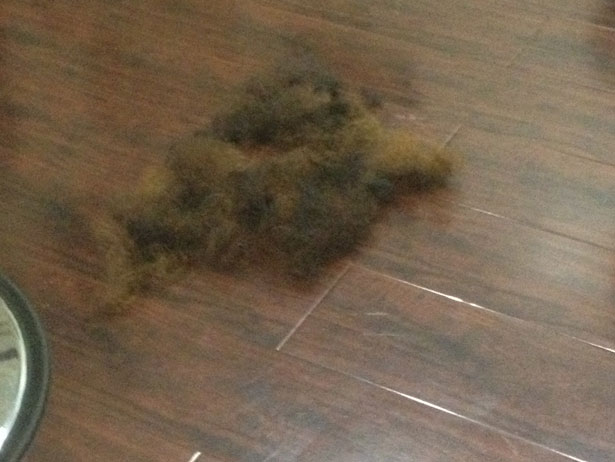
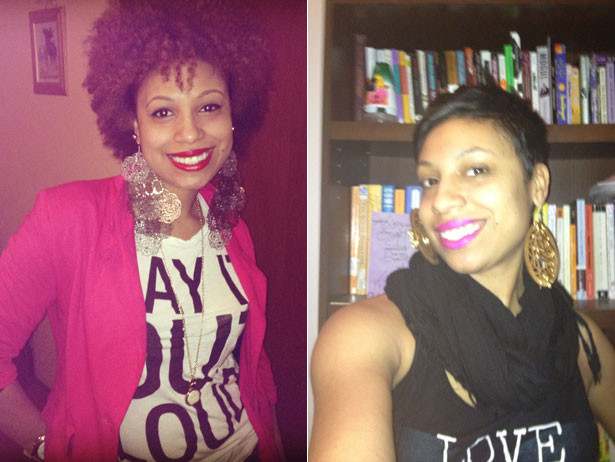
As fully employed adults who had to work the next day the two of us should have been prepping for the next day. Instead we gave in to a night of smacking cards on tables and score keeping telling ourselves we’d leave at a reasonable hour. But as all Spades players know, the game is unpredictable as all hell. Chris greeted us at the door with a warm welcome. “What up, B? You cut off all your hair,” he mentioned while holding his hands in the air for the ‘fro I’d only cut off days earlier. On New Year’s Eve I’d cut off the natural tresses I’d grown for two years opting for a Halle Berry/Nia Long cut that required a relaxer. (My current beautician politely corrected me when I said “perm.” A perm reverts straight hair to curly, a relaxer does the opposite).

Chris’s house seemed to be the gathering spot of the college educated, talented, pro-Black folks who graduated from HBCUs. Imagine a Howard reunion of sorts consisting but with way less people. As a non-Howard alum I was likely in the minority. Chris’s beautiful southern girlfriend who rocked locs was in town and it was our first time meeting her. With her sweet demeanor and love for black people she seemed like the perfect match for him. Another woman who was there hanging out with the other folks in the house donned a head of long, thick black natural hair that’d she’d blown out. It was the first time I’d been the only woman in the room with a relaxer.

In NYC, especially BK or Harlem where certain pockets are incredibly black and cultured, natural hair is in. It’s almost as common as seeing women with relaxers or weaves. By contrast when I went home for my college’s 100th year homecoming I was one of the few women with natural hair although I was rocking a “natural” textured weave. I mention this because back home I wouldn’t have thought twice about having a relaxer. But here I was in BK on a Sunday night, the only woman with chemically straightened hair.

As the night went on Chris came back to his initial thought when he met us at the door. The super militant–all black everything kind of dude–was rocking a Bob Marley tee; and his girl had the green and black Bob Marley track jacket to match. “So B, you cut your hair. When did you do that?” The day before New Year’s Eve. “Oh, man, it was so big. It’s nice though.” Thanks. ‘It’s nice’ felt obligatory even though I knew my hair was fly.

My mind wasn’t fixated on this for too long because I was too busy debating whether Five Heartbeats or Temptations was the better flick and quoting classic lines from Five Heartbeats to validate my argument. Five Heartbeats won by a landslide, as it should. Eventually we called it a night after winning two games against the beautiful couple.

Although I’d been completely happy with my cut I couldn’t help but to think back to being the lone one for the first time. In certain settings I’d been the only woman with natural hair before and never felt a way about it. If anything I was proud to be the unique one in the group, but the same wasn’t true with my newly straight tresses. In 2011 after reading Asaata Shakur’s autobiography I wrote a post on her thoughts on black women and hair. It was her words that solidified my strong feelings on never relaxing my hair again for not wanting to conform to European standards of beauty. Unfortunately the real truth was: I hated my natural hair texture.

The two years I was natural, plus the six months I’d transitioned was a constant uphill battle on feeling pretty. What people don’t tell you is that after having a relaxer from the age of 10 and finally having to confront the texture that grows from your own scalp nearly 16 years later, is a struggle with self-esteem. At least for me it was.

Many in the natural hair community are not honest about various aspects of being natural. My opinion from what I’ve observed and listened to is that countless women who wave their #teamnatural flag proudly wouldn’t dare wear their hair in its natural state if they couldn’t achieve a certain curl pattern. Thousands of the same women spend boatloads of money on products to achieve the loose wavy curls that are less kinky. I never could get into the #teamnatural movement or the policing of other women’s hair because I knew the struggle I’d had myself and the hypocrisy amongst many in that community was off-putting. But I did and do understand their pride in pushing back against the norm, which is why I reveled in rocking my ‘fro even though I considered it unmanageable.

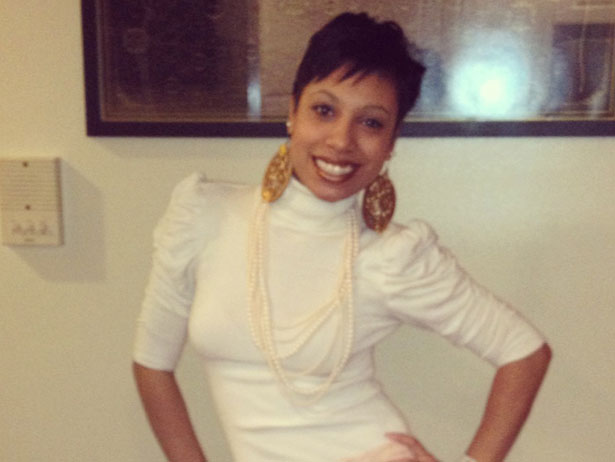
I always do some major changes with my hair on the cusp of a new year. For months I’d been reminiscing to ’06 when I chopped of my hair the length of Halle’s after a bad breakup and wanted a fresh start. Rihanna’s badass fly self with her new ‘do didn’t help my urge. Short hair had always been my best look. As a natural I was tired of wearing weave & wigs because my hair hadn’t grown to the length I felt it should in two years. Every time someone complimented how they loved my huge ‘fro I felt somewhat like a fraud. Two years of not feeling beautiful it was time to make a long hard decision– a choice that would have been a no-brainer if I didn’t have to relax my hair to achieve the look I wanted.

When I sat in the beauty shop chair on December 30th I hadn’t made up my mind. I was going to get it pressed until I had arrived at a decision I could live with. When she start showing me how much of my damaged ends she’d have to cut to make a cute bob, I knew right then I was cutting it off. This is what will make me happy in the moment and it will be fly, I thought.

After Sunday night (ironically I’d worn an Angela Davis t-shirt) I wondered how many more times I’d be in the company of fabulous, smart, progressive women who refused to confirm to European standards of beauty and feel like I traded something that was self-empowering for superficiality.

I wholeheartedly don’t regret my decision. One day I will transition all again and my ‘fro will be here to stay. But for now this is what makes me happy and makes me feel beautiful and confident. And as one of my Twitter followers told me after I lamented about the people fake devastated by me cutting my hair, “Loving ourselves wholly and fully is revolutionary.”

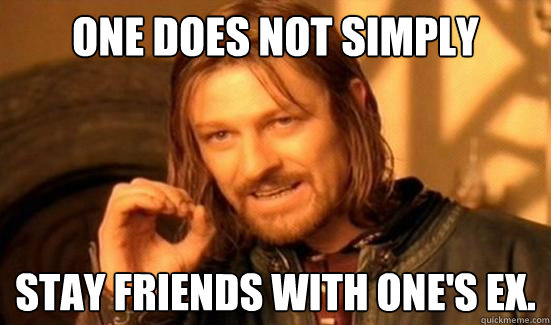
“I’m Not Dating Anyone That’s Still Friends With Their Ex”

It was one of those beautiful Saturday afternoons where the sunlight reflected off the bold walls in my colossal bedroom. Five o’clock had rolled around and I was still sprawled across my bed staring at the ceiling. My mood was a mix between melancholy and anger over a disagreement I’d had with Epiphany. Every time there was an alert on my phone I’d anxiously look to see if it was him. He never called. Thankfully my best friend did. She immediately knew from the tone of my voice that something was up. After venting we blabbered about everything under the sun for six hours. We laughed. And I’d finally felt like myself again.

During that soul lifting conversation she joked about vicariously living through my very full dating life. When I rambled about the woes of dating she responded, “I’ll never forget the day you told me I should be dating. This is why I’m not!” Although she had the desire to marry and have children at some point she wasn’t actively doing anything to work toward that dream. Even though she wasn’t involved with anyone she had a vision for how she wanted her fairytale to play out. Damn you Disney, for your stupid patriarchal fairytales. Because of previous situations she had a list of questions that she promised herself she’d never wait too late to ask, and by not wait too late she meant within the first few dates. I let her ride on her list of questions because I understood the reasoning behind it. But when she hit me with, “You know, I’m not dating anyone that’s still friends with their ex,” I figuratively went nuts.

“What? That’s absurd,” I damn near yelled. “It’s also unreasonable.”

“No, I don’t think so,” she said firmly.

“Not everyone hates their ex. You should be able to trust him to know their friendship is just that–a friendship.”

“It’s not that I wouldn’t trust him. It’s just too easy for something to happen.”

*silence*

“Let’s say they’re hanging out. As friends. They have no intentions of doing anything. They start drinking, the attraction is still there and the next thing you know one thing leads to another and they’ve crossed the friendship line.”

“But this won’t happen because they’re just friends. They’ll respect the boundaries,” I retorted.

“I’m just saying. Once you start having a good time with someone you used to love or care about it’s too easy to cross that line. I’d trust him, but his ex/friend has no alliance to me. If she wants to cross the line she’s not going to think twice about me.”

“I hear you. But how you gon’ find a man that’s not friends with any of his exes?”

We laughed.

About six months later I met Cam through mutual friends. We’d all gone to college together, but he and I never crossed paths while in school. We both loved music, but other than that I didn’t see what either of us would have in common. As handsome as he was he wasn’t my type. Over the next few months we’d bump into each other occasionally. It was always a pleasant exchange, but nothing more, nothing less.

Since we knew a slew of the same people his name would come up in random conversation nearly a year before I’d ever met him. I basically knew of him before I “knew him.” One day my friend mentioned that he was in a relationship with a local chick we all knew from our hometown. People that knew them knew they were together, but it wasn’t a relationship they went around toting for the city to see. I never thought twice about their situation because it didn’t pertain to me.

After running into Cam enough times he suggested we have lunch. Since I never assume that a guy asking to hang out means he’s interested, I said of course. Like many of our encounters to follow, that lunch turned into us spending the rest of the day together vibing. Apparently he was newly single.

Time went on, we clicked. There was never a dull moment. It was something new and fresh and it turned out we had lots in common.

The most I’d learn about his previous relationship was summed up in a five minute conversation. After four years he didn’t see the relationship going anywhere so he broke it off. There was no messy fallout or drama. It was just over but they were still friends. I suggested they work it out because they seemed to really care about each other (from what I assumed based on a couple of things). He insisted he knew it wouldn’t work. End of discussion.

Being around him I never felt like his attention wasn’t all there, or that he’d rather be somewhere else. He also never hesitated to take me around our mutual friends that could easily tell the ex beau we were dating. Despite all of this something kept tugging away at me that I was walking in rebound chick territory. Perhaps it was intuition. For some nagging reason I couldn’t get past the thought, ‘How can I compete with someone he was with for four years. And they’re still friends.’ I’ll own up to this being my own insecurity.

My phone conversation with my bestie replayed in my head for days. I’m not dating anyone that’s still friends with their ex, I’m not dating anyone that’s still friends with their ex, I’m not dating anyone that’s still friends with their ex was on repeat in my head. Was she onto something?

I still believe exes can go from lovers to platonic friends. Sort of. One of the people I love the most on this earth is someone I’ve been in a relationship with. He’s my best friend. I couldn’t imagine someone giving me an ultimatum or telling me that it’s a fine line to continue our friendship. Granted I don’t still have feelings for him, which is a huge difference between having feelings for an ex and just being friends.

As for Cam and I? I broke it off with him a day later. I didn’t ask him if he still was in love with her or still had feelings. Knowing they were close friends was enough for me. And I knew I was too damn fly to be anybody’s rebound chick. Even if my suspicion was only based on a hunch.

The Dating Conundrum

It was one of those rare 65 degree November nights in the city where magic happens. AEON, a new men’s magazine, was having their launch party in the Samsung store on 59th Columbus circle. Imani and I had met the group of five friends from New Jersey who had founded the mag the night before at a private dinner they had at Duo on Madison Ave. We were invited by Imani’s popular radio host mentor. I reveled in the fact that five men had remained friends (two of which were brothers) for over 15 years, and had capitalized off of several business ventures in various industries. However, they pooled their resources together to create a lifestyle and sex magazine tailored to men.The success they’d achieved in their actual careers allowed them to pursue this without a necessity for profit to pay their bills.

The launch party was like most NYC industry events. Only here would they turn a store that only sells Samsung products into a venue for a fabulous event. Imani and I hit the open bar for several glasses of Barentura Moscato, which did nothing to get me buzzed. We worked the room, mingled a bit. Ok, a lot. The abundance of beautiful black men was unprecedented, at least as far as I had seen. My freshly done 16″ sew-in made for an interesting night of men hitting on me disguised as networking, and it made for even more colorful conversation.

I ran into a guy I’d met at an after work shindig a couple months back. Phil told me he was a designer and his boys bragged about the album cover he’d created for a well known rapper. We talked about my blog that he admitted to reading. Inevitably the conversation trailed down the path of what women and men love to discuss– women and men.

“If I were dating in this city I wouldn’t take any dude seriously,” I proclaimed. “I’d be a chronic dater.”

“Why?”

“I mean, do you know any men under the age of 35 in NYC that are seriously trying to be in a committed relationship?”

“Good point.”

In the summer of ’09 I lived in Jamaica, Queens while interning at VIBE. I was single as ever. It was then I’d come to the conclusion that I wasn’t impressed with the men in NY. Meeting guys was never the issue. It was something about them that I hadn’t encountered in southern or Midwestern men. One of the two guys that stand out was an “entrepreneur.” The other had a good city job doing construction. He was apart of the union so he had great benefits, but worked long hours. Both guys were native NY’ers. Between both of them I always felt as if they wanted me to chase them. The courtship was bare minimum and came with a heap of expectations. In 2010 when I came to NY for my 25th birthday a couple of my guy friends warned me about men in NY. In a nutshell they told me that most of them are not serious about monogamy. They confirmed what my southern belle girlfriend living in NYC had told me that same weekend.

“Women in NY are so aggressive. They’re like vultures. You can’t even talk to a man at an event or bar without 10 other women staring you down, waiting for you to walk away so they can holler at him. Men know this and act accordingly.”

Since then I’ve been to enough launch parties, celebrations of book releases, house parties, networking events, music listening sessions and the like to understand not much has changed. I still wouldn’t expect much from any dating situation. Professional men in the city with degrees, jobs and no children believe they are the creme de la creme. They know that women outnumber men. They also know that for every one woman that takes a bit more effort to date, there’s five more that don’t require much at all.

When I took my random thoughts to Twitter I had no idea it’d turn into a full on two hour conversation. Women (and a few men) chimed in with their experiences all over the globe. What many women agreed on was that the desperation for women to create a nuclear family (get married & have some babies) has contributed to making dating difficult. I immediately wanted to ignore this as just another way that patriarchy plays out by blaming women. Desperate women do not dictate how a man treats a woman or if he’s going to play games. But the larger point, which I agree with, was that if women weren’t operating out of this anxiousness to have a man, any man, they’d raise the bar. By raising said bar men would have no choice but to step up to reach for that bar. In following this argument, women actually have the power to set the tone for what they expect from men when dating. And in doing this women start to set the standard.

Alas, that would be a perfect world. One where sexism and patriarchy doesn’t exist. One in which women don’t think they are doomed if they are single and childless by the age of 30. One in which women don’t validate or sneer other women based on their marital status. One in which men don’t have so many choices so they think they are a commodity. One in which women aren’t constantly fed messages via the media and society at large that they aren’t good enough and must change themselves to get a man. One in which men and women weren’t socialized to conform to heteronormative gender roles. But I digress.

Ironically this conversation was sparked opening weekend for Steve Harvey’s Think Like A Man, which beat out Hunger Games raking in $33 million in sales. The number one movie has an all black cast that tells women to think like men because clearly thinking like a woman is just stupid and will leave you lonely. (Important to note: the screenplay for Think Like a Man was written by two white men). If the growing interest in relationship books, relationship experts and “how-to” relationship movies are an indication of anything, it’s that both sexes desire love. Admitting we desire companionship and life partners is the easy part. Where it seems to get a little fuzzy is what we do to attain what we want. That seems to be a bit harder. Something no dating movie is going to change.

Check out the chirpstory of the insightful conversation we had on Twitter.

His Name is Trayvon Martin

Tears hit my black keyboard as I typed through my anger, frustration, sadness of a seven-year-old girl killed by police gunfire while they served a no-knock warrant at her home in Detroit. Her name was Aiyana Jones. My head hurt. My heart ached. That was May 16, 2010.

Almost two months later, July 8, 2010, ESPN televised “The Decision” featuring LeBron James. He would announce his decision to leave the Cleveland Cavaliers to join the Miami Heat. I didn’t care about that. More importantly that day the trial verdict of BART Police Officer Johannes Mehserle was announced. Mehserle was convicted of involuntary manslaughter of shooting a handcuffed (unarmed) Oscar Grant in the back as he lie face down on an Oakland train platform. Mehserle’s was sentenced to four years in prison. The grief of Grant’s parents, family, friends may last a lifetime.  Once again I wrote about the lack of justice. I wrote it so I’d never forget his name.

Of course there was Amadou Diallo. Latasha Harlins. Eleanor Bumpers. Sean Bell. Kathryn Johnston (who was 92-years-old). Danroy Henry. All unarmed. All killed by those who view blacks as a threat.

Seven days before my 27th birthday I marched for Trayvon Martin. His only crime was being black in America. At 17-years-old he was gunned down with only having a can of iced tea and Skittles in his pocket. His murderer, a captain of the neighborhood watch, is still free. I chanted for justice. I yelled his name hoping that onlookers taking photos and recording video would remember. Hoping the same onlookers would go home and be moved to action. Really, hoping they remembered his name.

A week before the march I cried. I cried because, once again, we were here, at this place. A place where the ugly stains of racism in America had reared its ugly head. For the zillionth time. Only this time it wasn’t a police officer who pulled the trigger. With the large outcry and help of social media, mainstream media finally took an interest in the case. If it had been a police officer who’d shot Trayvon his death would have been swept under the rug like countless others. For the umpteenth time a black family was left to mourn the life of a child who should still be alive. I felt helpless as I had so many times before when there was no justice for a murdered black life. I was outraged that black life, again, meant nothing to America.

On Friday, March 17, the 911 tape of George Zimmerman calling in what he thought was a “suspicious” person was released. Another 911 tape of a witness calling in the gun shot she heard from her apartment was also released. I regrettably listened.  Zimmerman told police “they always get away.” Later it sounds as if Trayvon Martin is pleading for his life. Almost 30 days later the murderer of Trayvon Martin remains a free man.

Unfortunately, the end of Trayvon’s life isn’t new to black Americans. He is one of thousands killed by racist, bigoted vigilantes and police who don’t see a human, but instead a black boogeyman. We are left to pick up the pieces and demand justice. Instead of the right thing being done by our justice system, we have to sign petitions, call the police department en masse to demand justice, write emails, send letters and organize marches while Zimmerman remains a free man.

Everyday black males are in jeopardy of being gunned down. Not because they have committed a crime. Not even for being in the wrong place at the wrong time. But because of the fear that society at large has of black males. And that the media continues to perpetuate in news, television, print and film. Black males are charged with the onus of being non-threatening so that the little old white lady doesn’t feel the need to clutch her purse when she sees him. They are charged with not wearing a hoodie so that someone doesn’t mistake them for being “suspicious.” Black males run the risk when driving a luxury car through a suburban neighborhood of being pulled over for driving while black. It is their obligation to avoid these types of situations. Never is it the obligation of our country to fix the ill it was built on.

I was sitting in traffic in route to the Million Hoodie March while Trayvon’s parents spoke in Union Square. Trayvon’s mother said: “This is not a black and white thing, this is a right and wrong thing.” Media headlines quickly honed in on that soundbite.

Danroy Henry’s parents made a similar statement in October 2010 when their college student son was killed outside of a club by Westchester County police. I understand why both the Henrys and now the Martins want the justice of their sons to appeal across racial boundaries, as it should. They know, like most people who live in this country without the privilege of never having to think about race, that the quickest way to receive a push back against your cause is to make it about race. If those parents had said, “Trayvon was killed because he was black, and the criminal justice system that hasn’t prosecuted my son’s murderer is an example of systematic racism,” some delusional Americans would have cried out, “They are playing the race card. Why does race always have to be brought up?” Sadly, it would also prevent people from caring or getting involved. So I get it.

But Trayvon’s case is about race. He was killed for being black. He was deemed “suspicious” because he was black. Zimmerman said, “They always get away,” the they implying blacks. He followed Martin (after the 911 dispatcher specifically told him not to) because he was black. Trayvon was killed for being black. Zimmerman hasn’t been arrested because the victim is black, and because he is not. The Sanford Police Department have tampered with witness testimonies because the victim is black and the murderer is not. Also they are too incompetent to handle a case of this magnitude with their sketchy history of other incidents revolving race. The police immediately believed Zimmerman’s claim of “self-defense” because the victim is black and he is not. This has everything to do with race. The media’s reshaping of Zimmerman being Hispanic (as if that matters) and honing in on the mother’s soundbite about it not being about race is a way to shift the focus. It serves to ease the guilt of Americans of the racist system they remain silent on far too often. Until we can have honest conversations about race and racism in America we will not progress.

*******

At one point when we were marching back from 42nd Street to Union Sq. (14th St.) I saw an older black woman to my left near the brick wall of a building. She watched and waited as we all walked by chanting and holding signs. I teared up as I saw the pride in her beaming eyes. I imagined she knew a lot about marching, standing up for basic human rights. Then I thought of all my ancestors. The abolitionists, the everyday people during the Civil Rights Movement, the revolutionaries of the Black Panther Party. I thought about how tired they must’ve been fighting. I envisioned the photographs I’ve seen of hoses being let loose on children, women and men. And the photos of police dogs attacking blacks in the streets for peacefully protesting. I again thought of how tired the ancestors must have been. But they kept fighting. They kept fighting not so much for their own benefit, but so that future generations could live in a world where blacks were seen as human, as equals.

As tired as I get from writing, protesting, signing petitions, marching, writing local and state officials, I must keep fighting. We all must keep fighting.

His name is Trayvon Martin.


Who’s Afraid of Blackness

We were standing at the bar of a very low key venue in Soho. It was the joint birthday party of two of my editors and the night was young. Imani and I were laughing at something when a couple of guys introduced themselves. We all chatted before we split into one-on-one woman/man conversations. Emile was a chocolate Ivy league brother from Haiti. You could tell he was used to easily impressionable types who swoon over a man’s intellect. Everything he wanted to discuss was political or community oriented. I didn’t mind, as these conversations are ones I have daily. But it was a party. Eventually the conversation took a turn down a dark road I rather not travel. I loathe the simplistic comparison of the success immigrants in America have had despite coming from nothing versus the plight of Blacks and their socioeconomic status today. But we found ourselves there.

“In the morning during rush hour all the Arabs, Asians and Indians are catching the train to Brooklyn while Blacks commute into the city for their jobs,” he said.

“What does that mean?” I asked.

“It means that immigrants aren’t trying to assimilate into white mainstream,” he responded. “They understand the value of the black market, which is why they own everything in our neighborhoods. They couldn’t care less about going to work for some firm on Wall Street.”

I replied with something sarcastic about that being a generalization and not the full picture. His response was myopic, explaining that the Asians who were in his Ivy league MBA program were not at all concerned with using their degrees to work for any Fortune 500 corporations. They got the degree(s), he said, and in most cases went back to their native countries to circulate money in their own communities, or they opened businesses here to send money back home. It all sounded like the tired, lazy argument that immigrants have been able to pull themselves up by the bootstraps, so blacks should be able to do the same. He wasn’t saying that, but was walking a fine line. Unexpectedly he blurted out, “Black Americans have an inferiority complex that keeps them down more than anything.”

Wait, what?

As a Haitian his ideals of blackness were not the same as black Americans. He also never dealt with being embarrassed of other blacks (as American blacks often are) because of the racial makeup in his country. His argument was that black Americans are too busy trying to prove to white people that we’re “good enough” because of the residual affects of slavery. He also argued this should be the furthest thing on our agenda.

********

Yesterday, Sean Combs (Puffy) announced he will launch his cable music network, Revolt, in a partnership with Comcast that is scheduled to debut in 2013. His announcement of course overshadowed the news that Magic Johnson will launch ASPIRE network (also in partnership with Comcast), which will feature programming depicting blacks in a positive light. I happily tweeted about being proud of Puff, and excited about the possibilities of Johnson’s ASPIRE.

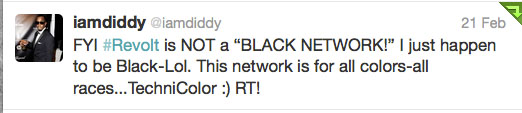
Less than 24 hours later I read Puff’s timeline to see what he was saying about his new business venture. I was taken aback when I read his tweet, “FYI #Revolt is NOT a “BLACK NETWORK!” I just happen to be Black-Lol. This network is for all colors-all races…TechniColor 🙂 RT!”

Sigh. Double sigh.

Prior to reading those tweets I had tweeted how much I respected Puff for always recognizing his target demographic and never pandering to mainstream. Unlike Jay Z, who recently said, “We don’t envision ourselves as an urban brand or streetwear brand,” in an attempt to rebrand Rocawear, I applauded Puff for never going that route with Sean John, Ciroc or any of his other brands. What a difference a day makes.

I get it, Puff. Revolt is not a black network. I’m not mad about that either. This post is not about his network not being a black one. It’s about the disclaimer that I can’t help but feel like was an attempt to separate himself from anything that could be perceived as being only for the Negroes. It reads as: “This here ain’t jus fo’ the Negroes, sah.” As if there is something wrong with something being solely black or created for a black demographic. And when has a wealthy white person ever launched a new business venture with the caveat that it’s not a “white business,” but one for all colors?

Why do we always have to pander to mainstream? When will we recognize the power in the black dollar? Oprah’s OWN network isn’t a “black network” either. How’s that working out for her? I say that with no malice, but to bring attention to the inherent idea that mainstream automatically means more successful. Targeting the black demographic is ok. Don’t let mainstream shame you about it either.

*********

Viola Davis and Octavia Spencer sat down with Tavis Smiley recently to discuss the controversy over “The Help,” in which both Davis and Spencer have won awards for their roles. Smiley kept it real about his ambivalence about the celebration of two black women playing maids in 2012. Just like the academy awarded Denzel Washington the award for “Training Day” where Washington plays a corrupt cop, Smiley, like most us, questions what the academy chooses to reward when it comes to African-American depictions. In the interview Davis and Spencer admitted they understand where the controversy is coming from. However, Davis was compelled to express the heavy burden placed on black artists:

And I will say this – that very mind-set that you have and that a lot of African Americans have is absolutely destroying the Black artist. The Black artist cannot live in the place – in a revisionist place. The Black artist can only tell the truth about humanity, and humanity is messy. People are messy.

Her stance was that black artists cannot exist only in a place that represents the best of blackness. Black people, our history, our stories, are complex. An artist who only takes roles that are uplifting, that tell a pretty story, is limiting to the black artist. Spencer, on the other hand, said she had not one hesitation about playing the maid or representing for her race.

*******

To Emile’s point, perhaps he’s onto something about this inferiority complex.

The black artist doesn’t want to be seen as a black [insert profession]. They just want to be seen as the thing they do. Black writers, black painters, black filmmakers are essentially writers, painters, filmmakers. The qualifiers aren’t necessary. Artists also want the liberty to create their art without it automatically being deemed “for black people.” And that’s our right as artists. It’s also totally reasonable. Blackness is convoluted. Like black people, black artists aren’t a monolith. Perhaps those things that are traditionally considered “black culture” aren’t relatable to some artists, therefore you have black artists who create art outside of the realms of blackness. I can live with that.

But I have to question the motives to shy away from the label “black.” Why are we so desperate for mainstream’s inclusion? Is it because we’ve been excluded for so long? Is it because we inherently think mainstream (read: white) is superior? Is navigating the space of mainstream the indicator of ultimate success?

As an artist I understand it all. I’ve had countless conversations about not wanting my hypothetical book to only be in the African-American literature section of Barnes & Nobles, or if the section should even exist. I’ve had even more conversations about wanting to break into writing for mainstream publications. I have to check my motives as well. Why am I so pressed about getting into mainstream magazines? Is it because I subconsciously think a clip in Cosmopolitan means more than a clip in ESSENCE? Of course I don’t. But the questions are worth analysis.

********

Puff is as successful as they come. His drive and business savvy took him from intern to mogul. Yet even with that level of success he’s asking that his Twitter followers “retweet” his tweet about Revolt not being a black network.

One day I hope we’re truly free. Free from trying to prove, still, that we’re good enough.


*Update thanks to one of my brilliant Twitter sisters @arieswym. Puff, Johnson and other minority’s were granted the opportunity to own networks with the Comcast/NBC merger because of the Memorandum of Understanding created by African-American organizations and Congress. Under the merger the FCC and Congress required Comcast to increase independent minority owned networks. As @arieswym said in the comment section, it’s ironic that Puff is tweeting about Revolt not being a black network when what I’ve outlined above is the only reason he has the network. See links below.

** African American Leadership Organizations and Comcast/NBC Universal Announce Memorandum of Understanding

*** Comcast launches minority-owned channels to meet regulatory commitments


Remembering Whitney Houston

“I don’t even want to cry. I think about her daughter, her mother, the people in her family. And I just think ‘how dare me cry.'”- Kelly Rowland

How dare we cry at the loss of our beautiful, soul belting beloved icon when her mother, daughter, her family mourn her loss. That hasn’t stopped the tears from falling. Rowland’s sound bite plays in the back of my mind every time I choke up singing along to one of her top charting hits played on the radio in her honor. How dare I cry. How dare I cry.

It was a cold wet Saturday afternoon. I was headed to Washington D.C. with my significant other for Valentine’s Day weekend. I was in mid sentence of Chimamanda Adichie’s “Half of a Yellow Sun” when he asked me, “Have you been on Twitter?” Irritated that he’d interrupted my reading I snapped, “Why would I be on Twitter?” He patiently responded, “You may want to check Twitter. Whitney has been reported dead.” “No. No! You know Twitter’s always killing off somebody. She’s not dead,” I quickly responded. “I just read the AP article confirming her death. You may want to check for yourself,” he concluded. I dropped my book in my lap and held back tears, not wanting to cry in front of the two guys seated in front of us who were now eavesdropping on our intense conversation.

From my iPhone I headed straight to the AP article. Then Twitter. For once this wasn’t some twisted hoax concocted by bored, evil people. It was real. And she was gone. I could no longer fight back the tears. I silently cried in my seat, and instantly knew what millions felt when MJ passed. Whitney Houston meant to me what Michael Jackson meant to others.

I immediately tweeted: “Not Whitney. At 48. Lord that’s too young. Poor Bobbi Kristina. #RIPWhitneyHouston.” My mind still hadn’t processed the enormity of the loss. Trying to snap out of it I thought of someone beside myself–her family. “This is just sad on so many levels. A daughter burying her mother. A mother burying her daughter. And us, mourning a legend,” I tweeted.

It was a tragic way to go for such a tremendous talent. Whitney Houston meant everything to little brown girls across the world. She was a stunning natural beauty without the extra enhancements. Her beauty with a lean figure to match took her far as a highly sought after teen model. She was the first black girl to grace the cover of Seventeen, which led to spreads in Glamour and Cosmopolitan. Thankfully, singing remained her first love.

I was born 14 days after Houston’s debut album, Whitney Houston, was released. I was two by the time the second album, Whitney, dropped, and five when her third album was released. Her music was the soundtrack to my childhood. As a fully grown woman I can sing many of her greatest hits word for word (ad libs and all) because her music and my childhood are forever linked. What black girl didn’t sing Whitney’s songs into a hair brush guised as a microphone while gazing into the mirror? I knew nothing about romantic love at seven, the age I was when Houston’s “I Will Always Love You” became a hit. But the song brought tears to my eyes, as did most of her ballads. “Count on Me,” “The Greatest Love of All,” “I Have Nothing,” “Miracle” and “Why Does It Hurt So Bad” were all tear jerkers well before I could fully understand the depth of what those words meant.

Houston would go on to break records as only a legend could. I’ve written in detail for BlackEnterprise.com about her sales, No. 1 hits, money grossed from her tours, movies and television appearances. I do not want to do that here. But I encourage you to Google her if you doubt the magnitude of her iconic status. 415 awards won setting a Guinness Book of World Records. The first ever artist to sell over a million records in a week. The ONLY artist to chart seven consecutive No. 1 Billboard Hot 100 hits. Nearly 200 million records sold. And on and on. But it wasn’t the album sales, the breaking through glass ceilings that connected so many of us to Whitney. It was the voice, the music. Not to mention her down-to- earth girlfriend-esque Jersey roots. She never forgot where she came from. We saw ourselves in Whitney as black girls in our adolescence.

In 2006 I was in my last year in college at Tennessee State University. To support myself I was working at the Cheesecake Factory in Green Hills. Celebrities frequented the establishment so it was never a big deal when it was time to provide service to a celeb and their entourage. I, myself, had waited on super producer Teddy Riley and eight of his friends. Big ups for that $110 dollar tip, TR. Cece Winans (who has strong ties to Nashville), Whitney Houston, an unknown child and I believe Bobbi Kristina decided to dine at the Cheesecake Factory during one of my many shifts. I can vividly picture the corner booth they sat in. I begged my co-worker to let me wait on their table. I pleaded about how much this would mean to me, even offering to split my tip with him. He declined my offer but gave me the go ahead to bring out their drinks and bread. I smiled, said hello as I was a little shaken with nerves. Both Whitney and Cece gave me warm smiles, “hellos and thank yous” as if they knew what it would mean to me as a young black woman. After setting the drinks and bread down I said, “I just want to tell you both how much your music means to me.” I didn’t want to slight Cece Winans, but my comment was meant for Whitney. “I wanted to wait on your table. But at least I got to come over to say hi.” They both laughed and Whitney said, “Thank you so much for telling us that. See how God works?” She was referring to the chance I took approaching the table while working. That was Whitney. Strong in her faith no matter where she was or who was around. She looked good. Happy even. In that moment she nor Cece were mega superstars. They were girlfriends sharing a meal with their loved ones. That moment is permanently sketched in my memory.

My co-workers went on to make jokes about Whitney’s cocaine addiction with the managers laughing and joining in. I never laughed. Me not laughing wasn’t an indication of being such a prude that I didn’t find their jokes funny. I just knew Whitney as more than an addict. I knew her as a darling that little black girl’s everywhere had adored.

When someone of Whitney’s influence passes I reflect on how we, the public, treated them while they were here. Did we forget she was human? Did we forget the skeletons in our own proverbial closets? Were we glass houses who probably shouldn’t have thrown stones? Yes to all the aforementioned. But Whitney was a public figure. One subject to have her life scrutinized under a microscope for the world to see. Maybe instead of rooting from the sidelines, or the press vigilantly watching and documenting her downfall, we could have done more. Said more. Or maybe none of that would have done any good anyway.

Whatever she felt that afternoon while sitting in her bathwater was without a doubt an indescribable pain. A pain we sat by and watched play out as a public spectacle for years. I can only hope that as she rests in eternal peace, Whitney Elizabeth Houston knew the mark she left on the world with her nearly perfect voice. I hope she knew we loved her.

My darling Whitney, may you finally know peace. I will always remember how your music makes me feel. And for the gift you blessed this world with, I will always love you.


Privacy Settings
We use cookies to enhance your experience while using our website. If you are using our Services via a browser you can restrict, block or remove cookies through your web browser settings. We also use content and scripts from third parties that may use tracking technologies. You can selectively provide your consent below to allow such third party embeds. For complete information about the cookies we use, data we collect and how we process them, please check our Privacy Policy
Youtube
Consent to display content from Youtube
Vimeo
Consent to display content from Vimeo
Google Maps
Consent to display content from Google